Features
US cyclists crossing into Canada: what to check before a rail-trail trip
Passport rules, bike declarations, insurance and duty limits for US cyclists crossing into Canada on northern rail trails, with trail town stops on each side.
What to take away
- Carry a WHTI document:US cyclists entering Canada by land need a passport, passport card, enhanced driver's license or NEXUS card.
- Declare the bike:a bicycle you ride across is personal effects, but you still tell the officer what you carry.
- Sort insurance early:Medicare and many US plans do not pay for care in Canada, so travel medical coverage matters.
- Learn the duty limits:the US exemption is $800 after 48 hours away and $200 for shorter trips.
Documents US cyclists need at a land border
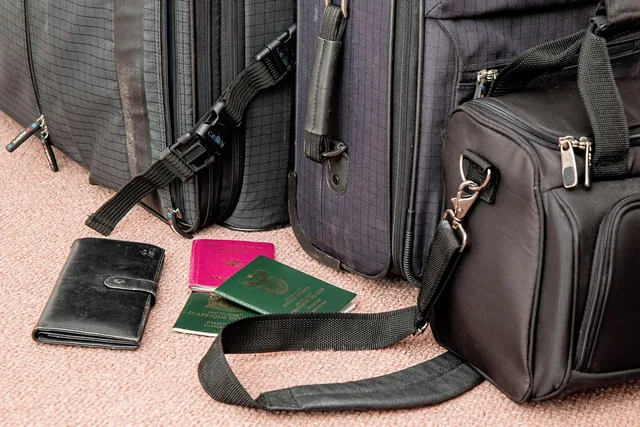
For cross-border rail trail trips Canada bound, the paperwork starts with the Western Hemisphere Travel Initiative. US citizens entering Canada by land need a WHTI-compliant document, and no eTA applies to a land arrival. Flying home changes the list.
At the primary booth
- Remove helmet and sunglasses
- Hand over one document per rider
- Answer trip length and route questions
- Declare bike, bags, alcohol, tobacco, food
Which document works where
Land crossing
- US passport book
- Yes
- US passport card
- Yes
- Enhanced driver's license
- Yes
- NEXUS card
- Yes
Flight home
- US passport book
- Yes
- US passport card
- No
- Enhanced driver's license
- No
- NEXUS card
- Yes
Cyclists often carry the wrong document. A passport card works by land and sea but fails for a flight home. An enhanced driver's license works only if your state issues one. Riders who want route intel alongside the rules can start with cross-border rail-trail trips near Canada.
Documents US cyclists need
| Document | Valid at a land crossing | Cyclist notes |
|---|---|---|
| US passport book | Yes | Works for land and air |
| US passport card | Yes | Land and sea entry only |
| Enhanced driver's license | Yes | Issued by a few states |
| NEXUS card | Yes | Application and interview |
At the primary booth:
Documents US cyclists need
- Remove your helmet and sunglasses so your face is visible.
- Hand over one document per rider, not one for the whole group.
- Answer questions about trip length, route and overnight stops.
- Declare the bike, bags, alcohol, tobacco and any food.
Declaring your bike and gear at Canadian customs
The Canada Border Services Agency treats a bicycle ridden by a visitor as personal effects, so no duty is normally due. The declaration still matters. Carry the frame serial number and a photo.
Bike declaration prep
- Frame serial number and photo
- Form 4457 for expensive bikes
- No cannabis in or out
- Most handguns barred
- Report CAD 10,000 or more
If the bike is expensive, ask US Customs and Border Protection for Form 4457, a Certificate of Registration for Personal Effects Taken Abroad, before you leave. It records the bike as US property and eases the return crossing.
Two items end trips early. Cannabis is legal inside Canada but illegal to bring in or take out, and admitting past use can make a rider inadmissible. Most handguns cannot be brought across at all. Currency of CAD 10,000 or more must be reported.
A drunk driving conviction can also bar entry, even an old one. Check admissibility before booking the trip.
Insurance and duty limits that surprise riders
Medicare pays nothing outside the United States, and many private plans cap or exclude foreign care. Travel medical insurance for the riding days is the usual answer.
Liability is separate. Provincial minimums apply to motor vehicles, and bicycles are not motor vehicles, yet a crash can still produce a claim. Check homeowner, renter or cycling liability coverage before you go.
Returning to the US, the personal exemption is $800 if you were away at least 48 hours, and $200 if you were away less. Alcohol and tobacco carry their own limits.
Canada's visitor allowances are 1.5 L of wine, 1.14 L of spirits or 8.49 L of beer, plus 200 cigarettes. Keep receipts for anything you buy north of the line.
A bicycle you ride across the line is personal effects, not an import. Duty questions usually start with what you bought while you were there.
Example: crossing at Richford, Vermont
Vermont's Missisquoi Valley Rail Trail finishes at Richford, a short ride from the Quebec line. The port of entry is small, so allow extra time and do not expect a truck plaza.
North of the border, riding continues on Quebec's Route Verte network. Le P'tit Train du Nord is a working example of a Canadian rail trail with booked shuttles and town stops.
Trail towns and crossings along the northern line
Not every international bridge accepts bicycles. Some corridors send riders over a different span or on a shuttle, so confirm the crossing before you book rooms.
E-bike access rules vary by jurisdiction, and the background on rail trails notes that each trail owner sets its own policy.
In the Niagara region, the Waterfront Trail runs along the Ontario shore within sight of New York State. Farther east, riders bound for Campobello Island from Lubec, Maine pass through Canadian customs, because the island is part of New Brunswick.
Parking at the start of a multi-day trip needs the same check. The canal parking guidance covers overnight and long-term rules at C&O Canal access points, which helps when a route opens with a towpath leg.
Cross-border trail town trip planning also means checking where you sleep, since border towns fill in summer and kitchens close early on weeknights. For a fuller look at the corridors that touch the line, see planning a cross-border trail trip.