Features
Questions to Ask Before Booking Rail Trail Lodging: Trail Access, Bike Storage and Late Check-In
Ask lodging hosts about trail access, locked bike storage, late check-in, overnight parking and pet rules before you book a rail trail town room.
What to take away
- Vet lodging by trail access before price. Ask how far the door sits from the trailhead and whether the last stretch is rideable at dusk.
- Get bike storage confirmed in writing. A locked garage, a covered rack and a room you can roll a bike into are three different promises.
- Favor towns with two places to sleep and one place to eat, so one closure does not strand you.
- Read the corridor map first, then search for rooms. Town spacing decides your daily mileage, not the other way around.
- Overnight parking, pet rules and e-bike access come from the land manager, not the front desk.
Map the corridor before you search for rooms
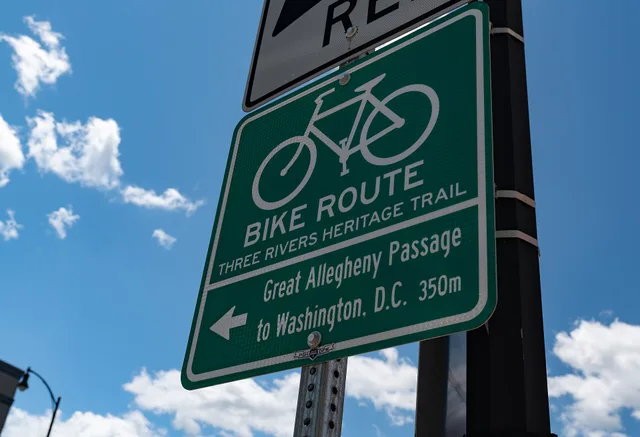
The Great Allegheny Passage runs about 150 miles between Cumberland, Maryland and Pittsburgh. The C&O Canal towpath continues another 184.5 miles to Washington, D.C. The Katy Trail crosses Missouri for roughly 240 miles.
Rail Trail Distances
- 150 milesGreat Allegheny Passage
- 184.5 milesC&O Canal towpath
- 240 milesKaty Trail
- 35-55 milestypical touring day
Nobody rides those in one day. Most touring riders settle into 35 to 55 mile days, which turns a long trail into a chain of towns. On the GAP that chain includes Cumberland, Rockwood, Confluence, Ohiopyle, West Newton and Homestead.
Those towns are not interchangeable. Some sit a mile off the trail. Others have one motel and a diner that closes at eight.
Match the room to your daily mileage
Match Room to Mileage
- Open corridor in TrailLink or ACA maps
- Mark towns within half mile of trailhead
- Build day around 40-55 mile range
- Shortlist towns with two or more lodgings
- Choose town, then compare rooms and rates
- Open the corridor in TrailLink or on Adventure Cycling Association maps and note every town with services.
- Mark the towns inside a half mile of the trailhead. Anything farther turns into a taxi or a dark, tired ride.
- Build the day around a 40 to 55 mile range, then check which towns fall inside it.
- Shortlist towns with two or more lodging options, so a booked weekend does not force a 70 mile day.
- Choose the town. Only then start comparing rooms and rates.
Questions to ask before you book
Call the property and ask four things. How far is the trail access? Can I store a bike in a locked space? Can I check in after 8 p.m.? Is there a hose or a rag?
Booking Questions to Ask
- How far is trail access?
- Can I store a bike in a locked space?
- Can I check in after 8 p.m.?
- Is there a hose or a rag?
- Ground floor, freight elevator, or wide hallway?
Online listings rarely answer those. A bike friendly tag on a booking site often means a rack by the front door and nothing more.
Ask about the room as well. Ground floor, freight elevator, or a hallway wide enough for handlebars all matter when you are rolling a loaded bike.
What good bike storage looks like
What Good Bike Storage Looks Like
What to ask
- Where do bikes sleep?
- Theft and weather
- Is storage covered?
- Rain rusts chains
- Can I charge an e-bike?
- Charging rules vary
- Is there a hose or rag?
- Limestone dust travels
- Can I arrive late?
- Long days push dark
Why it matters
- Where do bikes sleep?
- In room or locked garage
- Is storage covered?
- A roof, not a tarp
- Can I charge an e-bike?
- Outlet in monitored space
- Is there a hose or rag?
- Spigot and drying place
- Can I arrive late?
- Key code or late policy
A strong answer
- Where do bikes sleep?
- Is storage covered?
- Can I charge an e-bike?
- Is there a hose or rag?
- Can I arrive late?
| What to ask | Why it matters | A strong answer |
|---|---|---|
| Where do bikes sleep? | Theft and weather damage end trips | In your room or a locked garage |
| Is the storage covered? | Overnight rain rusts chains | A roof, not a loose tarp |
| Can I charge an e-bike? | Battery charging rules vary | An outlet in a monitored space |
| Is there a hose or rag? | Crushed limestone dust travels | A spigot and a place to dry gear |
| Can I arrive late? | Long days push arrivals past dark | A key code or a stated late policy |
A trail town lodging checklist
- Trail access under one mile, or a confirmed shuttle
- Storage described in writinglocked room, garage, or in-room
- Cancellation policy that covers a washout
- Food within walking distance, or a delivery option
- Late check-in confirmed by phone
- Permission to leave a car overnight where the trip starts
Example: an overnight stop in Confluence, Pennsylvania
Confluence sits near mile 61 of the Great Allegheny Passage, where the Casselman and Youghiogheny rivers meet. Riders crossing from Cumberland often use it as a middle night.
The town has several lodging options within a short walk of the trail, plus a grocery store and restaurants. Ask two questions when you book: how steep is the final approach into town, and what time does breakfast start?
Parking, pets and the small print
Multi-day trips usually start with a car left somewhere for a week. Read the official parking guidance for C&O Canal access points before you commit a vehicle to a trailhead lot.
If a dog joins the ride, the National Park Service pet rules on the C&O Canal towpath set the leash standard you then match with a pet-friendly room.
Secure parking matters at the other end of the day too, and bicycle parking infrastructure and standards vary widely. Look at the rack before you trust it with a loaded touring bike.
Lodging hosts, shuttle drivers and the wider town
The person who locks your bike at night is often the person who will drive you to a trailhead 30 miles away in the morning. Shuttle services fill the gaps when lodging spacing does not fit your daily mileage.
Inns that host guided groups take on extra work: early breakfasts, bag transfers, and a photo of the whole party. If you ride with a guided group, photographing a guided cycling group without breaking its rhythm becomes part of the morning.
Towns that want that business back need to think past a bike rack and a welcome sign. The real question is whether towns can offer tour operators more than a parking spot and a bed.