Guides
Part of Picking a bike trail town: the criteria that actually matter in 2027
What to Pack for a Trail Town Ride: Repairs, Visibility, Weather and Town Clothes
A packing list for trail town riding: tire choice for mixed surfaces, lights for road connectors, spares rural shops lack, plus weather and town clothes.
A trail town trip has two riding environments and most packing lists only cover one. There is the corridor, which is gentle and often unpaved, and there is the connector between the corridor and the town, which is usually a road. Pack for both or you will be uncomfortable on one of them.
What to take away
- Tire choice is set by the worst surface on the route, not the average one.
- The road connectors are where visibility equipment earns its place.
- Carry the spares a rural shop is least likely to stock.
- Town clothing is part of the trip, because the town is the point.
Tires and the surface question
Federal guidance on recreation trail access says soft or unstable surfaces limit who can use a trail. It treats minimizing soft surfaces, grade and cross slope as the way to make a trail usable by more people.
That is a design principle, but it doubles as packing advice. If any section of your route is loose or soft, that section sets your tire.
A workable rule: on mixed paved and crushed-stone corridors, choose a tire wide enough for the loose section and accept being slightly slower on the paved one. The reverse trade leaves you walking.
The connectors deserve real lights
The ride between a trailhead and a town is often the day's least protected stretch.
The US Department of Transportation ran walking and bicycling safety assessments in every state. Its pedestrian and bicyclist road safety assessments summary reports 52 completed by the end of June 2015. Conflict on shared road space recurs, and your connector uses that space.
Carry a rear light you would use on a road at dusk, not a trail blinker. Add a front light bright enough for an unlit lane. Both weigh very little and both get used.
Corridors also run darker than open roads. Tree cover, cuttings and bridge underpasses all cut the light well before sunset, and an unlit tunnel is genuinely dark at midday. A front light is not only for the ride back into town.
The pack list
| Category | Items | Why |
|---|---|---|
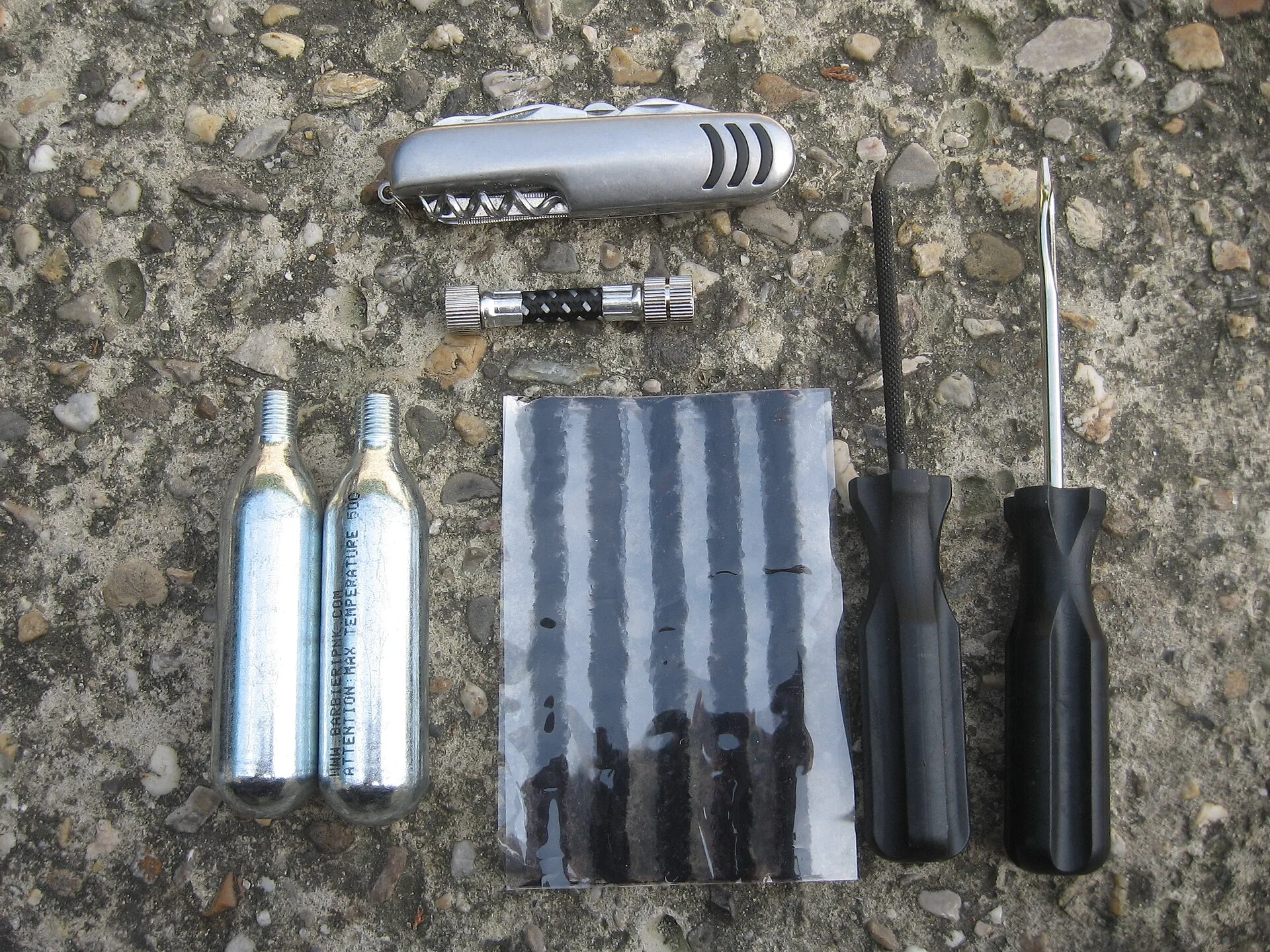
| Repairs | Two tubes, tire boot, chain link, derailleur hanger | Rural shops rarely stock hangers |
| Visibility | Front and rear lights, reflective band | Connector roads at dusk |
| Weather | Packable shell, warm layer | Corridors are shaded and cold |
| Town | One clean set of clothes, light shoes | Because you will walk in the evening |
| Water | Capacity for the longest gap between towns | Rural taps are not reliable |
What to leave behind
- A second pair of riding shoes.
- A full toolkit when a multitool and a chain tool cover the field repairs you can actually make.
- Anything you carry because of a hypothetical rather than a section of the actual route.
The route determines the pack. If you have not confirmed surface and services yet, that comes first, and the criteria for choosing the base town are in the trail town shortlist. For the hazards that shape what you carry, see what first-time visitors miss.