Features
3 things to check on a trail town's Main Street in Xenia, Ohio
Bike-trail towns like Xenia, Ohio reward a pre-ride check of Main Street hours, bike parking and repair, and food and water timing before you commit.
What to take away
- Bike-trail towns get judged in Xenia at the point where the Little Miami Scenic Trail meets Main Street: confirm shop hours, rack placement and resupply windows before you roll in.
- Xenia, Ohio sits at the center of the Little Miami Scenic Trail and several connecting rail-trails, making it a genuine hub rather than a pass-through.
- Main Street businesses in Xenia keep shorter hours than trail traffic assumes, especially on Sundays and in winter.
- Bike parking exists but is unevensome racks sit behind buildings, and covered storage is limited near the trailhead.
- Food and water are easy to find during the day, but the window between lunch service ending and dinner service starting is the real gap.
- A ten-minute check of hours and distances before you ride saves an hour of circling once you arrive.
Why Xenia works as a trail hub
Xenia, Ohio is not a town that happens to have a trail near it. The trail network runs through it, and the town grew its downtown around that fact. The Little Miami Scenic Trail passes through Xenia on its route between Springfield and the Cincinnati area, and several other rail-trails converge here.
That convergence is what makes Xenia a hub rather than a stop.
Trail hubs rarely appear by accident. The National Park Service explains how trails are created through deliberate planning and partnerships.
Downtown sits close enough to the trail that a cyclist can leave the path, eat, repair a bike and return without losing the day. From Xenia you can ride toward Yellow Springs, Dayton or the Little Miami corridor without repeating the same pavement. That range is why cyclists treat it as a hub.
Riders testing a two-day visit against a bike trail town ideas packing list often find that the second day reveals what the first day hides.
Three checks cover the parts of a Xenia stop that go wrong.
Check one: services and opening hours on Main Street
Service hours on Main Street are the first thing to verify, because they decide whether your arrival time works. Xenia's downtown is compact and walkable, but it is a small Ohio city, not a resort strip. Shops close. Kitchens close between services. Sunday hours are shorter than Saturday hours almost everywhere.
Main Street Hours Checklist
- Bike shop hours, lunch closures
- Restaurant with continuous afternoon service
- Grocery or convenience store for water
- Pharmacy or general store supplies
- Public restroom location and season
- Sunday opening for target businesses
Know Before You Go guidance is written for public lands, but the principle transfers directly to Xenia: confirm what opens on Main Street, when, and what happens if your arrival misses it.
Arriving at 3 p.m. to a closed kitchen costs you the afternoon. In Xenia the posted hours follow a seasonal pattern that is narrow enough to plan around.
Here is what to confirm before you ride in.
- Bike shop hours, including whether the shop closes for lunch
- At least one restaurant with continuous service through the afternoon
- A grocery or convenience store with water and basic food
- A pharmacy or general store for minor supplies
- Public restroom location and seasonal availability
- Whether your target businesses open on Sunday
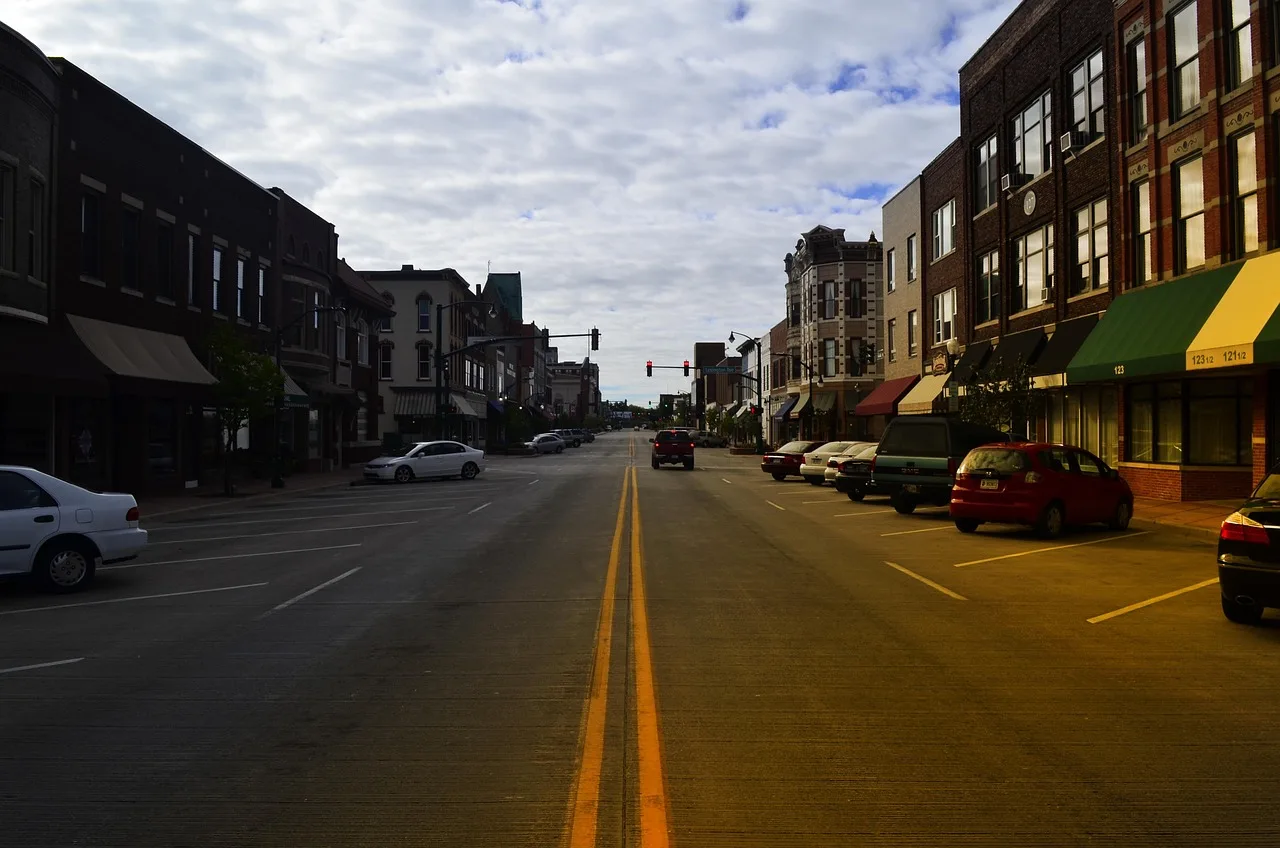
Downtown Xenia businesses cluster along Main Street and the blocks around it, so once you park you can cover the core on foot in a few minutes. The ranges below are typical for the town rather than exact for every business, and the sign on the door decides.
| Season and day | Typical posted hours |
|---|---|
| Summer weekdays, May to September | Shops 10 a.m. to 7 p.m., kitchens 11 a.m. to 9 p.m. |
| Winter weekdays, November to March | Shops 10 a.m. to 5 p.m., kitchens 11 a.m. to 8 p.m. |
| Saturday | An hour shorter than a weekday at both ends |
| Sunday | Shops 11 a.m. to 4 p.m., and many kitchens close by 2 p.m. or stay shut |
Three Xenia businesses carry most trail riders through a visit. K&G Bike Center, the town bike shop, typically posts 10 a.m. to 6 p.m. on weekdays, an hour less on Saturday, and the shortest hours of the week on Sunday.
Kroger keeps long hours all year, usually 7 a.m. to 10 p.m. seven days a week, which makes it the reliable resupply when Main Street is dark. The Skyline Chili in town serves straight through the afternoon, which covers the gap between lunch and dinner when the downtown kitchens have closed.
If you want to compare how other towns handle this, bike parking trail town restaurants covers the same problem from the restaurant side.
For questions about Ohio trail rules, closures or connecting routes, the Federal Highway Administration lists state bicycle and pedestrian coordinators. Ohio's coordinator is the right first contact when a route question goes beyond what a shop on Main Street can answer.
Check two: bike parking, repair and storage
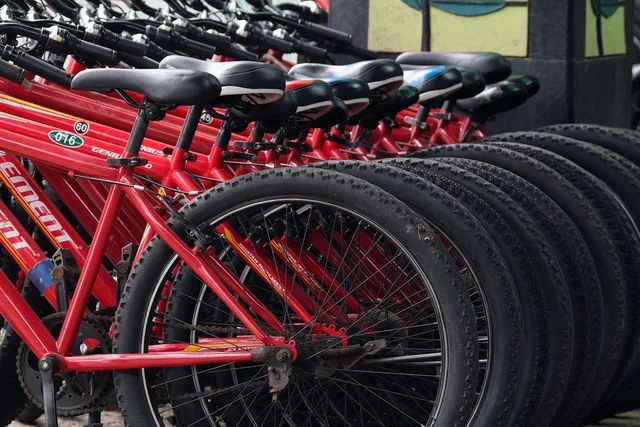
Bike parking is the second check, and in Xenia it is a mixed picture. Racks exist downtown, but they are not evenly distributed, and some sit around the side of a building rather than in front of it. A rack you cannot see from the street is a rack you will not use with a loaded touring bike.
Two locations cover most stops. The racks in front of the storefronts along Main Street keep your bike in view while you eat. The racks at Xenia Station, the trailside depot on South Miami Avenue where the Little Miami Scenic Trail crosses town, stand in the open a few steps from the path.
Repair capacity is the more important question. A town can have ten restaurants and still fail as a hub if nothing opens when a derailleur hanger snaps. Xenia's bike shop keeps the hours shown in the table above.
Whether that shop can do same-day work depends on the bench and the parts on hand. Wheel size, brake type and drivetrain decide it, and a shop booked two days out will say no.
Storage matters for overnight stays. If you are leaving a bike while you eat, a visible rack and a lock are enough in most downtown settings. If you are staying overnight, ask your accommodation directly where the bike goes.
Some properties allow bikes in rooms. Others have a garage or a locked shed. A few have neither, and that changes where you book.
That question belongs in the same conversation as bike trail town ideas time, because lodging location decides how much of your day you spend riding back and forth to services.
Carry the basics anyway. Xenia's bike shop runs limited Sunday and winter hours, so a flat picked up on the Little Miami Scenic Trail at six on a Sunday evening is yours to fix, not theirs. A spare tube, a multi-tool and a pump handle that.
Check three: food, water and resupply timing
Food and water resupply timing is the third check, and it is the one most riders get wrong. The failure mode is not scarcity. Xenia has food. The failure mode is timing: you arrive during the gap between lunch and dinner, or on a Sunday evening, and the options thin out fast.
Xenia Resupply Windows
- Morningbakeries and coffee shops open, water easy
- Middayfull kitchens run, real meal possible
- Eveningrestaurants reopen, groceries may close earlier
- 2-5 p.m.confirm which place serves straight through
Plan around three windows. Morning, when bakeries and coffee shops are open and water is easy. Midday, when full kitchens run and you can eat a real meal. Evening, when restaurants reopen but grocery options may close earlier.
If your ride puts you in Xenia between two and five in the afternoon, the grocery and the chili chain are what is open, and the downtown kitchens are not.
Water deserves its own line. Public fountains and bottle-filling points near the Xenia trailhead are often seasonal in Ohio, shut off after the first hard freeze and reopened in spring. Do not assume a fountain works in November. Carry more than you think you need on warm days, and refill whenever you pass a working source.
Distances between resupply points on the Little Miami Scenic Trail and its connecting routes vary, so treat Xenia as your reliable anchor rather than one stop among many. Riders who understand trail town costs generally find that food and water are the smallest line item and the one most likely to derail a day when ignored.
A short worked example. Suppose you plan a 45-mile day on the Little Miami Scenic Trail that ends in Xenia at 4:30 p.m., with a bottle refill planned at Xenia Station. The kitchen you wanted stops serving at three.
You leave thirty minutes earlier, roll into town at 3:45, eat, then refill bottles at the depot while the grocery is still open. Same 45 miles, same route, no wasted evening.
What the three checks change about your ride
Running the three checks changes four decisions in Xenia: when you leave the Little Miami Scenic Trail for Main Street, where you stop, how long you linger and what you carry on the stretch beyond town. Together they remove most of the friction from the visit.
Start time is the first thing to move. If Main Street kitchens close mid-afternoon, your arrival needs to beat that. If the bike shop opens at ten, a repair errand belongs in the morning, not late in the afternoon.
Stop selection is the second. Knowing that Xenia has food, water, parking and repair lets you treat it as a fixed point and plan the rest of the route around it. That is what separates a hub from a waypoint.
Linger time is the third. A town with continuous service and visible parking earns a longer stop. A town where everything closes at two earns a quick resupply and a push onward. Xenia generally earns the longer stop, but only if your timing matches its hours.
What you carry is the fourth. Even in a well-served hub, a spare tube, water capacity and a backup snack cover the gap when a shop is closed or a fountain is off.
The dog-friendly rail trails lodging lesson repeats the same point: the towns that work are the ones where riders verified the details instead of assuming them.