Industry
Part of 4 pointers on cycling trip mistakes that hold up
Choosing lodging that keeps a cycling trip out of trouble
How lodging choice causes or prevents cycling trip mistakes: the ride in from the highway, walkable evenings, and towns where traffic has been calmed.
Lodging causes more trip problems than it gets blamed for. The room is rarely the issue. The half mile between the room and everything else is, and that half mile is usually on a road nobody checked.
What to take away
- Check the ride between the lodging and the trail, not only the distance.
- Evenings on foot in cycling shoes are part of the trip. Pick a town where that works.
- Towns that have calmed their streets are measurably easier places to arrive tired.
- The property answers three questions well and the rest badly. Ask the right ones.
The connector road is the risk
A property advertised as one mile from the trail may sit at the end of a highway with no shoulder. That mile is ridden twice a day, often tired, sometimes in poor light, and it carries more risk than the whole corridor.
Ask a specific question: what is the road between here and the trail access point, and is there a shoulder or a sidewalk? A property that cannot answer has never thought about it, which is itself informative.
The road can be checked before booking. Open a mapping app in satellite or street view and follow the line from the property door to the trail access point: the shoulder, the crossings and the lighting are visible from home. The trail's official map and the local chamber's town map both show where the access points really are, and TrailLink, the trail finder run by Rails-to-Trails Conservancy, shows the route town by town. Ask a local bike shop which of those approaches it would ride and which it would not.
Calmed streets are not decoration
Traffic calming has a working definition. Federal best practice quotes the Institute of Transportation Engineers: the combination of mainly physical measures that reduce the negative effects of motor vehicle use, alter driver behavior, and improve conditions for nonmotorized street users.
Federal best practice notes they have been shown to reduce traffic speeds and, in turn, pedestrian deaths.
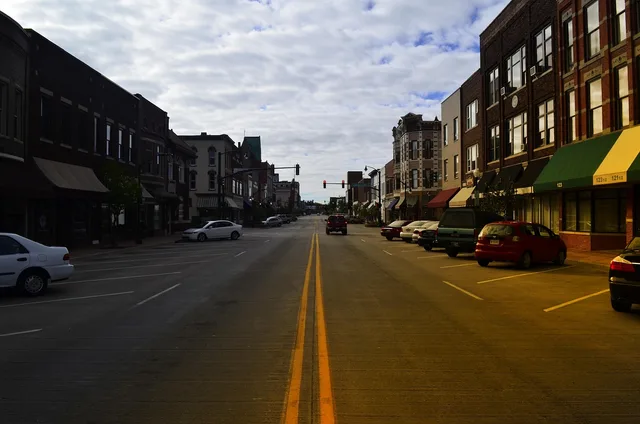
A town that has done this work is a better place to finish a long day. You will notice it as narrow streets, short crossings and slow traffic rather than as a policy.
Why some towns feel different
Project community effects are an assessed discipline. FHWA's community impact assessment quick reference, published in 2018, sets out how transportation decisions are examined for their effects on the places they pass through.
Towns where that thinking was applied tend to have kept their centers usable on foot, which is exactly what a cyclist wants at seven in the evening.
Trails where this matters
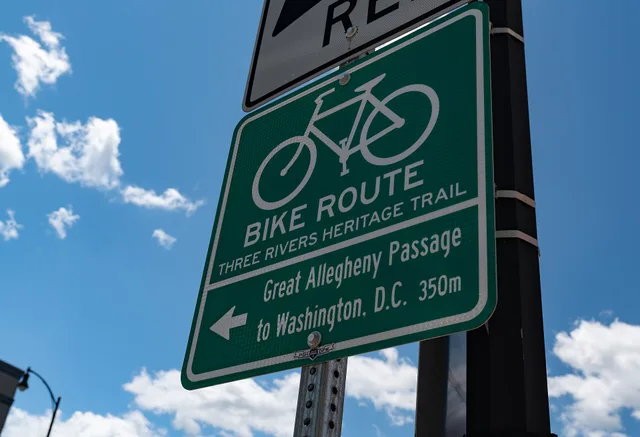
The Great Allegheny Passage runs from Cumberland, Maryland, to Pittsburgh, and its trail towns are where the lodging is. In Confluence and Ohiopyle, Pennsylvania, guesthouses, bed-and-breakfasts and restaurants sit a short walk from the trail. Missouri's Katy Trail works the same way in Rocheport and Hermann, where a small inn or a bed-and-breakfast in town beats a room out on the highway with a fast road in front of it.
The bad setup is a chain motel a mile out on a two-lane highway with no shoulder: cheap room, worst mile of the day, ridden twice. The good setup is a guesthouse or an independent motel with its door on a town street. You park, walk to dinner, and roll onto the trail in the morning without a single fast pass. Check the kitchen's closing time before you book; on a long day, that detail decides your evening.
What to ask the property
| Question | Why |
|---|---|
| What is the road to the trail like? | The highest-risk part of the day |
| Can the bicycle come inside? | Theft and weather |
| What is walkable from here in the evening? | You will not want to ride again |
| What time does food stop nearby? | The most common evening failure |
| Is there legal overnight parking? | Avoids a towing surprise |
Parking rules come from the town or the land manager rather than from the room rate. Overnight parking on a public street is set by the town's ordinance and by the signs posted on that block, while a state park trailhead follows the land manager's rules instead. Where a tow-away sign stands, it is enforced. Ask the property where guests leave a car, then confirm the rule for that specific block or lot with the town police non-emergency line or the state park office.
Then check it independently
Ask the trail manager or a local shop the first question again. Properties describe the road optimistically, and the people who ride it daily do not. The rest of the failure pattern is set out in what causes cycling trip mistakes, and the general method for choosing a base is in where to stay on a rail trail trip.